 |
| Scapegoat: Howard Davies. Image courtesy of http://petersearle.com/images/howard_davies.jpg |
For the exact details of the accusations levelled against Davies and the LSE, I would suggest reading the Guardian or BBC articles covering the story, which clarify them in some detail -
http://www.guardian.co.uk/education/2011/mar/03/lse-director-resigns-gaddafi-scandal
http://www.bbc.co.uk/news/uk-12642636
I will openly admit that my first reactions to the revelations concerning the LSE's links to the Gaddafi regime were very negative. There can be no doubting the corrupt nature of the current Libyan government - if previous years had not made this obvious enough, then the events of the last fortnight have served to underline once and for all just how unpopular Muanmar Gaddafi is, and the criminal lengths he is willing to go to in an effort to cling on to power. It is undoubtedly a black mark against the School that it should have links with such a leader, and I still hold that view.
However, from reading related articles, it seems that the LSE is far from the only institution to have links with the Libyan leader. Nor is there any indication that the University has acted in an underhand or dishonest way - its actions have been open from the start. While we might question the personal decision taken by Davies to advise the Libyan government on financial matters, he ultimately acted at the request of the British government. Why, then, are we not also chasing the resignation of those officials who proposed such an undertaking in the first place? Nor, as the Guardian has pointed out, was Britain the only country to offer such advice.
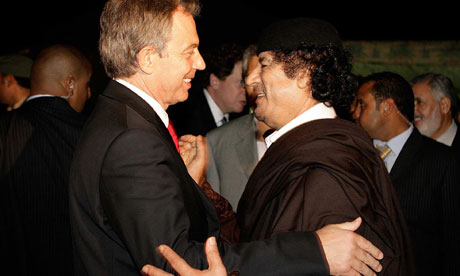
None of this would be an issue were it not for recent events in Libya. Tony Blair was famously pictured embracing Colonel Gaddafi in 2007, yet no purge was demanded upon his return to the UK. Equally, the Labour government's decision to release the Lockerbie bomber, while hugely unpopular, did not result in this kind of witch-hunt. Current events can be the only explanation for why Howard Davies is being so vilified - he is being made into the British accomplice of Gaddafi, a sensationalized story in an effort to sell newspapers and ensure a British interest in the current Libyan crisis, not to mention a blatant attempt deflect attention away from the government that encouraged his actions. His actions, while undoubtedly misguided in PR terms, appear on the face of things to be innocent enough. While personal judgement should perhaps have told him not to offer financial advice to a regime of such questionable moral integrity, this in no way implicates him in the crimes of the Gaddafi government, and he only acted at the request of the British government, so if questions of morals are being raised, the buck certainly cannot stop with him.
 |
| Best of Friends - Blair and Gaddafi. Image courtesy of http://static.guim.co.uk/sys-images/Arts/Arts_/Pictures/2011/2/24/1298572836940/Tony-Blair-Embarks-On-Tou-007.jpg |
While the LSE's decision to accept money from Saif Gaddafi and to train future Libyan civil servants certainly does little to help the School's case, it does not directly imply their support of any of the morally questionable activities of the Libyan government. If the independent report into the decision to accept the donation happens to prove that the money was accepted as some sort of bribe, then I will happily revise this statement, but as things stand, there is no evidence to prove this.
Yet the most frustrating thing is that while that none of these accusations link the LSE in any way whatsoever to the current actions of the Gaddafi regime, this is precisely what is being implied by the press. Howard Davies, and by implication the LSE, is being made into the British scapegoat for Gaddafi's actions, which is utterly absurd. Howard Davies is not the only individual, nor the LSE the only institution, to have links with the regime, and yet they are the only ones being publically vilified by the media for such links. And in doing so, the media is entirely missing the point. The events in Libya should be commanding our attention, rather than some absurd witch-hunt within our own community in an effort to cleanse our Government's current embarrassment at their recent attempts to curry favour with the Libyan despot. I'm not sure which is more despicable: the media's attempts to portray Davies and the LSE as being linked to the crimes committed by the Gaddafi regime, or the Government's decision to let them. Frankly, both should be ashamed. While I do not personally agree with Davies' actions, I do feel that they have been blown entirely out of proportion, and he is clearly not the only person, nor LSE the only institution, involved here. Support for Gaddafi evidently ran/runs much deeper than one University, and the media's apparently successful attempts to make an example of Davies and the LSE completely fail to reflect this. But then again, it always has been easier to single out one man or one organization for blame, and declare them unique, than to take the deeper and undoubtedly more painful route of questioning our societal values as a whole...

No comments:
Post a Comment